Credit-risk engine
AI reads and narrates; a deterministic engine decides; the human validates.
Anonymized case · internal system
- Role
- Builder
- Stack
- Apps Script · Claude · Node / Jest · tests · Drive OCR
The problem
Approving commercial credit by eye is slow and risky, and reading financial PDFs by hand doesn’t scale.
The system
It reads financial PDFs and recommends a credit line. The design key: a deterministic rules engine sets the amounts by archetype; AI only reads and narrates; the human validates. Logic covered by automated tests.
AI prepares; rules calculate; a person validates.
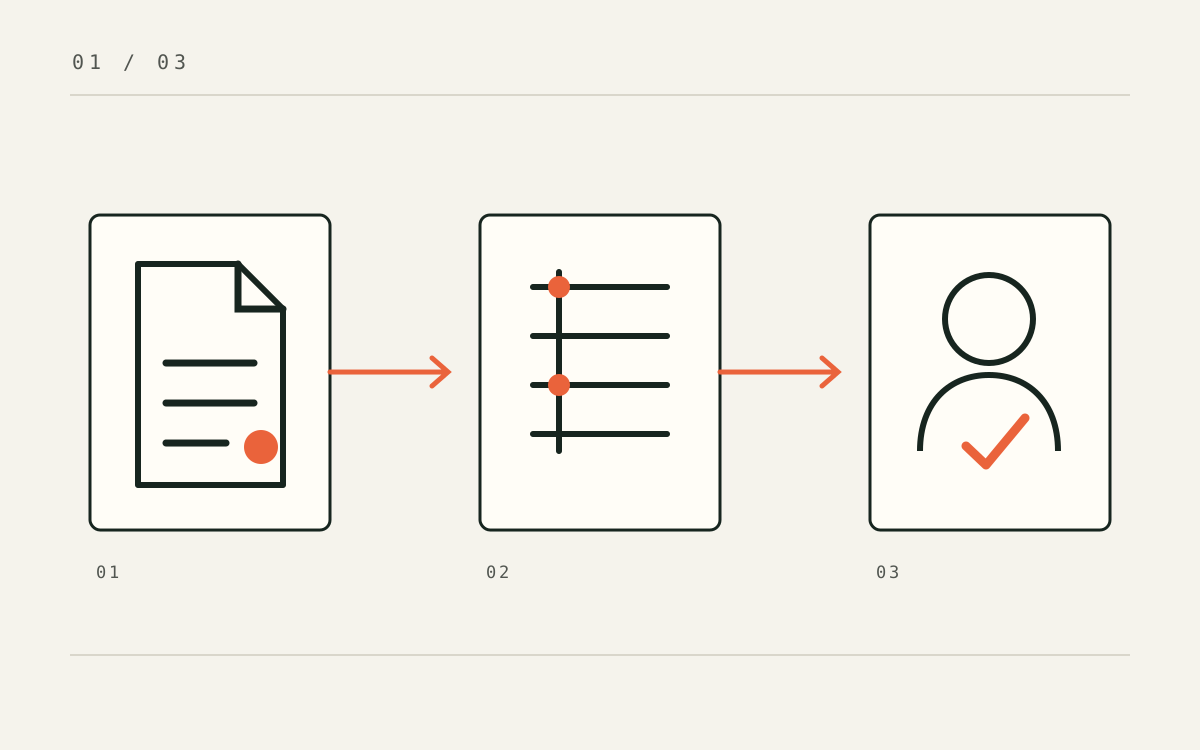
The engine separates reading financial statements from recommending credit. This makes extracted data reviewable while keeping the amounts subject to explicit rules.
- 01
Read
The system takes financial statements in PDF form and prepares the case information. AI helps read and explain; it does not set the credit amount on its own.
- 02
Apply rules
A deterministic engine calculates a recommendation by archetype. Automated tests cover the rule logic to catch unintended changes.
- 03
Validate
A person reviews the case before deciding. The interface shows pending companies and risk levels to organize that review.
If you are building oneDesign lesson: for a consequential decision, keep extraction, calculation and approval separate. Check the input and show where a person intervenes; a fluent output does not replace that review.
What changed
The work had to be felt in the operation.
- 01
Automated tests on the logic
- 02
AI narrates, the engine decides
- 03
Analysis flow with human validation
Do you have a similar operating challenge?