Agent factory for teams
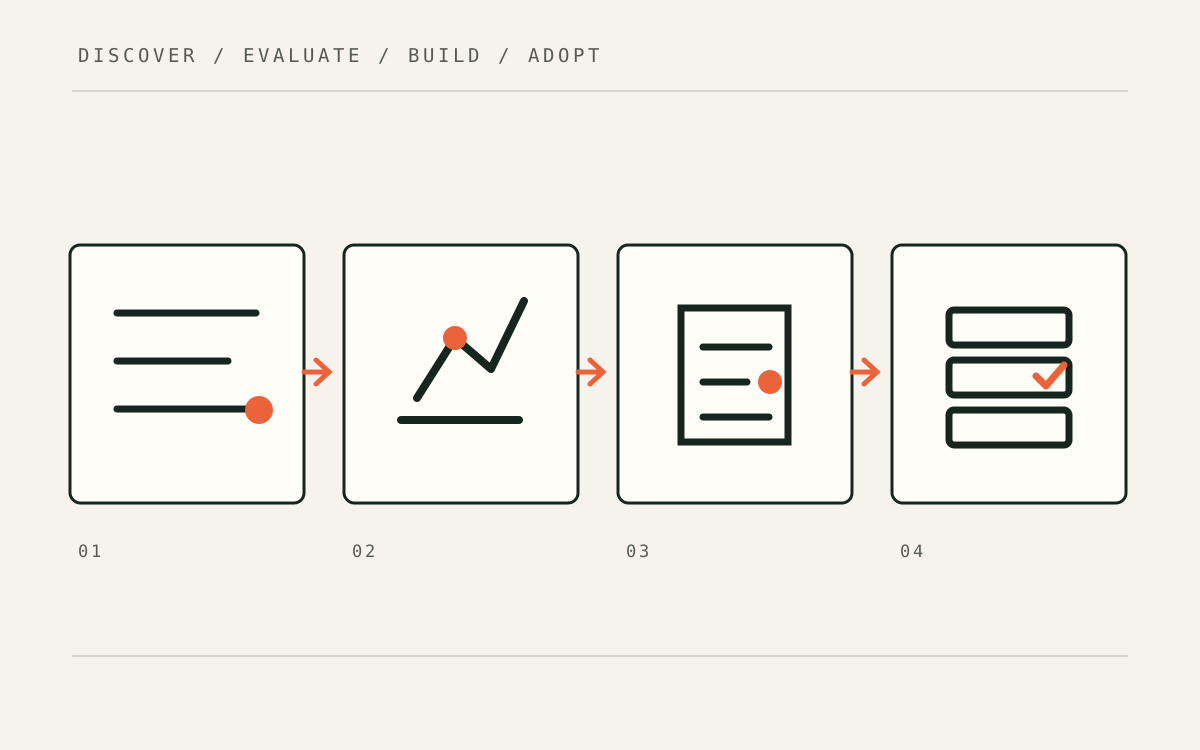
An automation idea moves through discovery, evaluation, build and adoption.
Anonymized case · internal system
- Role
- Architecture · Builder
- Stack
- Python · FastAPI · Slack Bolt · Anthropic SDK
The problem
When every team experiments with agents on its own, it is hard to separate useful tasks from demos, repeat what works and define who reviews the output.
The system
I built a conversational four-stage flow coordinated by a state machine: discover the use case, assess impact and feasibility with safeguards, generate a configuration and add it to a catalog for use. The interface lives in Slack; this case omits internal data and screens.
Put evaluation and owners before the agent.
The flow turns a conversational request into an assessable use case, a configuration and a catalog entry. The diagram illustrates the architecture without showing internal work.
- 01
Discover
The conversation identifies the task, who performs it, which information it needs and what useful output looks like. The aim is to define a concrete problem before choosing a tool.
- 02
Evaluate and build
One stage reviews impact, feasibility and safeguards. Another generates the agent configuration under a state machine that preserves the case's progress.
- 03
Adopt
The agent enters a catalog so teams can find and use it from their work channel. Human review and access limits remain part of the design.
If you are building oneDesign lesson: the ability to generate an agent does not justify one. It needs a repeated task, authorized context and a person accountable for reviewing its usefulness.
What I built
An architecture you can examine.
- 01
Four stages connected in one flow
- 02
Evaluation before building an agent
- 03
Reusable configurations and catalog
Do you have a similar operating challenge?